|
 |
 |
 |
| |
| View species stock → |
|

|
Species
|
Aepyceros melampus petersi. |
Conservation status
|
Vulnerable. |
Height ~
|
0.92 m / 3' ft |
Weight ~ |
79 kg / 170 lb |
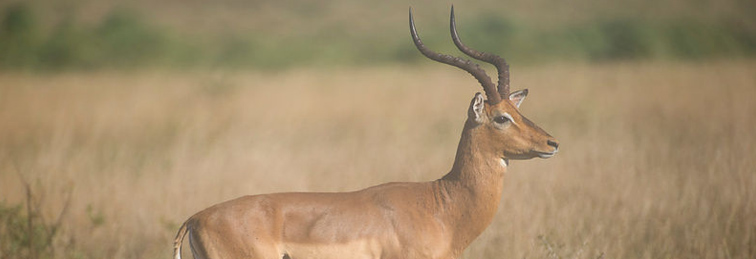
Although its physical dimensions are indicative of a large gazelle, certain details of its anatomy and behavior causes the impala to be classified in a group of its own. Specifically, its gregarious nature and tendency to inhabit relatively dense brush separate it from the gazelle tribe.
The impala's ability to both graze and browse allow it to live in greater numbers as a result of a larger, more reliable food supply to choose from. Medium-sized antelope do not have this choice.
Amazing jumpers, impalas are able to take bounds of almost 40 feet, up to 10 feet high.
Males maintain a territory -rather than a set herd- into which they try to attract mates. In fact, males can spend up to one quarter of their day trying to round up receptive females, which greatly reduces the time he spends feeding. This energy consuming activity usually gives a male reign for only 3 months before he becomes too weak to ward off competitors. However, males usually prefer the same territorial areas they first won so after recuperating in bachelor herds, they will try to regain their former territory. Thus, the male that replaces the current head of the area is usually the former leader.
|
|
|
|
|
|
| |
| ¹ Specialized Breeders covers the first year of insurance. Insurance restores up to 80% of the total value. There are additional insurance options that include -among others- animal stress, fire and specific diseases. |
|
|
 |
|
 |