|
 |
 |
 |
|
| The private wildlife industry has grown tremendously over the past two decades mainly due to the expansion in breeding and live sales of plain game species. The private wildlife industry is comprised of three main segments, namely; the breeding of game, wildlife tourism/ecotourism and game products. Each of these pillars has their own unique characteristics that need to be taken into consideration before investing in them. |
|
| |
| Index of contents → |
| |
| |
|
|
|
| |
|
| |
| GAME BREEDING |
 |
| |
Over the past two decades the game breading sector only really got going with the developments and investment in game catching, game transporting and game auctioning facilities. Without this investment numerous ranchers did not even consider live sales as a marketing avenue for their game. Another contributing factor that unlocked the value of breeding stock was the development of a game insurance product that can be used as a risk management tool especially during the stress period during capturing and the adjusting period after the sale of the game.
The breading and sale of high value game and colour variants lead to an approach of intensification of breading systems to optimise the utilisation of the natural resource. For example, Zebra graze the upper stems of grass while wildebeest graze on leaves. This has improved the sustainability of grazing lands but needs to be managed more intensively. The strength of the industry lay therein that a breeding farm does not need scenic beauty, has up to now been cash based and have a tax advantage that stimulate investment. The potential negative impact of disease outbreaks, the high barriers to entry in terms of capital investment and lack of up to date information remains the main weaknesses with in the industry. In 2014 the total turnover on game auctions grew by 35% year on year to a historic high of R1,8 billion.
Due to the lack of up to date information and taking into consideration that only approximately 20% of game is sold at game auctions the turnover of the game breeding segment of the wildlife industry is estimated to be R10 billion. This excludes revenues from secondary industries like fencing, feed manufacturing, pharmaceuticals, etc.
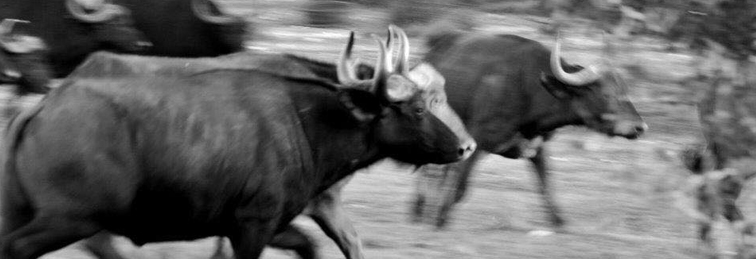
Further expansions in breading of game can be expected especially in the scarce game species like Buffalo and Sable. Over the past months prices on game auctions have however started to decline. This can be the result of normal seasonality as breeders tend not to buy during the breeding season. However, given the increase in supply it could be argued that the market is getting saturated and that price will tend to soften.
To become a breeder is easy. You don’t even need to own land, you can even rent land. All it takes is a fence, a few females and a male, the question however is does it add value to diversification and the build of superior genetics. Therefore, the barrier to enter the breeding market is fairly low and given current prices it is expected that more breeding farms will be established. There will also be a switch from hunting farms to breeding farms.
|
|
| |
|
| |
| WILDLIFE TOURISM |
|
| |
Wildlife tourism has become the leading and fastest growing sector in the tourism sector with 88% of all visitors to South Africa (13,4 million) indicating that they are here on holiday. It is estimated that 50% of 12,1 million tourists on holiday will incorporate a wildlife experience in their visit and on average spend R3 486/day of which the biggest portion (75%) is on accommodation, food and transport. The turnover of wildlife tourism segment of the wildlife industry, given the above assumptions, is calculated to be R104 billion. This, to a large extend, is evenly matched by the multiplier effect that wildlife tourism has on 4x4 trails, Airlines, Outdoor equipment, Hotels, etc.
Currently SAN parks equate to 3,7 million hectare while the 6330 exempted privately owned wildlife farms equate to approximately 14,7 million hectare opening a huge opportunity for further growth and investment into the wildlife tourism industry. The strengths to wildlife tourism is that it creates jobs and insures better facility utilization. It however need better management and higher capital investments especially in facilities. |
|
| |
|
| |
| GAME PRODUCTS |
|
| |
Game products consist out of various saleable products like horns, hides, feathers, eggs, medicine, curios, shoes, clothing, furniture jewellery, handbags and fashion accessories of which game meat is the biggest. It can be argued that a well-functioning local and international game meat market is a prerequisite for the future stability of the game industry as old traditional consumption markets, trophy and biltong hunting cannot keep up with the switch in land use from livestock farming to that of wildlife ranching. To date, the local venison market has been relatively underdeveloped due to consumer’s perceptions that venison is only available in winter months as well as draft regulations that dead animals can’t be delivered to an abattoir.
The latest survey under wildlife tourists did however indicate that there is a definite export opportunity but that the market still needs to be developed. Unfortunately, the developing of an export market is not without its risks as disease outbreaks can limit market accessibility. Exports of venison however hold significant growth opportunities. New initiatives, to get approval for mobile abattoirs are the first key in the developing of a sustainable venison market. South Africa also has a comparative advantage over other venison export countries as it can offer a greater variety due to specie diversification.
Unfortunately, there is no data available to estimate the relative size of the game products segment of the wildlife industry except for ostrich and the limited possessing of venison by abattoirs namely Camdeboo and Mosstrich. The income contribution from game products is calculated to be R1,2 billion (Ostrich R560 million and Hunting R720 million). |
|
| |
|
| |
| CONCLUSION |
|
| |
| The wildlife industry is in a sweet spot with further growth opportunities in all of the above segments especially that of breeding game as it have the lowest barrier to entry. The total turnover of the wildlife industry is estimated at R122,7 billion making it the largest industry compared to other agricultural industries. Given the success of the wildlife industry, the commercialisation of certain other endangered game species may need to be reconsidered. By legalising trade in certain endangered game and products it may be possible to save these species for next generations and turn a threat into a benefit and potential contributor to economic growth for South Africa. Additionally, the game industry is well adapted to drought conditions in Southern Africa and offers needed diversification opportunities to producers in the region. This is especially true as agricultural competition from neighbouring countries north of South Africa is expected to increase. The wildlife industry is therefore expected to continue to grow. |
|
Transcribed from the article "Wildlife industry expected to continue to grow" by Ernst Janovsky.
June 2015.
|
|
|
 |
|
 |