|
 |
 |
 |
| |
| View species stock → |
| |

|
Species
|
Diceros bicornis - black.
Ceratotherium simum - white. |
Conservation status
|
Critically endangered. |
Height ~
|
1.80 m / 5' 11" ft |
Weight ~ |
1,300 kg / 2,800 lb |
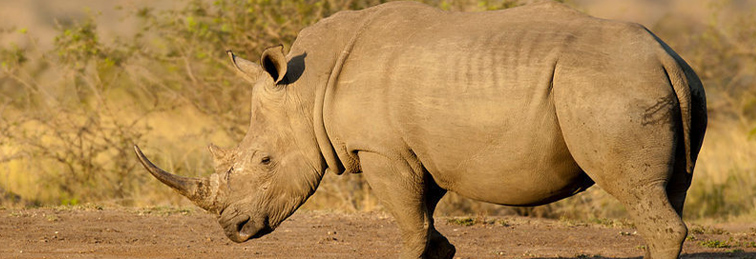
A rhino's horn is not attached to the skull. It grows from the skin and is made up of keratin fibers, the same material found in hair and nails.
They have a wide squared off lip that allows it to eat a wide swath of the green, short grasses that grow in the open savannahs.
Black rhinos travel alone except while breeding or raising offspring. Juveniles remain with the mother until they are completely weaned just before a new baby is born.
On the other hand, the white rhino is semi-gregarious; the females and sub-adults are rarely alone. The dominant male patrols the territory that the females and young pass through. Females in managed situations will reproduce better if they are in a group.
During the European exploration of Africa, the white rhino was actually less numerous than the black rhino. In recent history the black rhino populations have been heavily poached to alarmingly low levels. Today, because of careful management in the Republic of South Africa, the white rhino population has increased dramatically. South Africa has approximately 80% of the world's population of white rhinos.
|
|
|
|
|
|
| |
| ¹ Specialized Breeders covers the first year of insurance. Insurance restores up to 80% of the total value. There are additional insurance options that include -among others- animal stress, fire and specific diseases. |
|
|
 |
|
 |